How to Paint Historic Home Trim Without Damaging It
Last Updated: November 9, 2026
Quick Summary
Before painting historic home trim, test the existing paint for lead, check the wood for rot by pressing a putty knife into it, and fill small holes with wood-compatible filler. Only after these checks should you sand, scrape, prime, and apply thin topcoats in dry, mild weather.
- Test old paint for lead before sanding or scraping, especially on pre-1978 homes.
- Press a putty knife into the trim; soft wood signals rot that must be repaired before coating.
- Scrape loose paint gently to keep the trim's profile intact.
- Apply primer first, then thin topcoats, since thin coats generally dry more evenly.
- Paint in dry, mild weather, avoiding direct sun on hot surfaces.
Table of Contents
- Test, Prep, and Repair Historic Trim Before You Paint
- Painting Exterior Trim That Is Peeling
- Finishing Your Historic Trim in White or Period Colors
- Frequently Asked Questions
Test, Prep, and Repair Historic Trim Before You Paint
Painting historic home trim starts before the first brush stroke. Homeowners often strip, sand, and recoat without knowing what's underneath. Historic trim often carries decades of paint layers, some possibly containing lead. Test first, then prep.
Check the existing paint for cracking, lifting, and bare wood. Press a putty knife into the trim; soft wood signals rot, which must be repaired before coating.
Sanding or scraping old paint without testing can release lead dust. Test for lead before disturbing old paint, and consult EPA lead-safe guidance for pre-1978 homes (the EPA).
Fill small holes and cracks with wood-compatible filler, then sand smooth. If cracks appear in the wall surfaces around the trim, learn how to fix cracks in plaster walls. For older plaster surfaces beside the trim, see how to prep old plaster walls for painting.
Before painting, run through these checks and prep steps from the article.
| Step | What to do | Note |
|---|---|---|
| Inspect paint | Check for cracking, lifting, and bare wood | Look before you strip |
| Probe for rot | Press a putty knife into the trim | Soft wood must be repaired first |
| Test for lead | Test before sanding or scraping old paint | Follow EPA lead-safe guidance for pre-1978 homes |
| Fill holes | Use wood-compatible filler on small holes and cracks | Sand smooth afterward |
Painting Exterior Trim That Is Peeling
Peeling exterior trim is often linked to moisture, so the underlying cause should be identified before repainting. Learn how to hire professional painters for historic restoration work if lead or contractor choices are a concern. For painting service on older homes with distinctive architectural details, see historic painting services. Scrape loose paint gently to keep the profile intact.
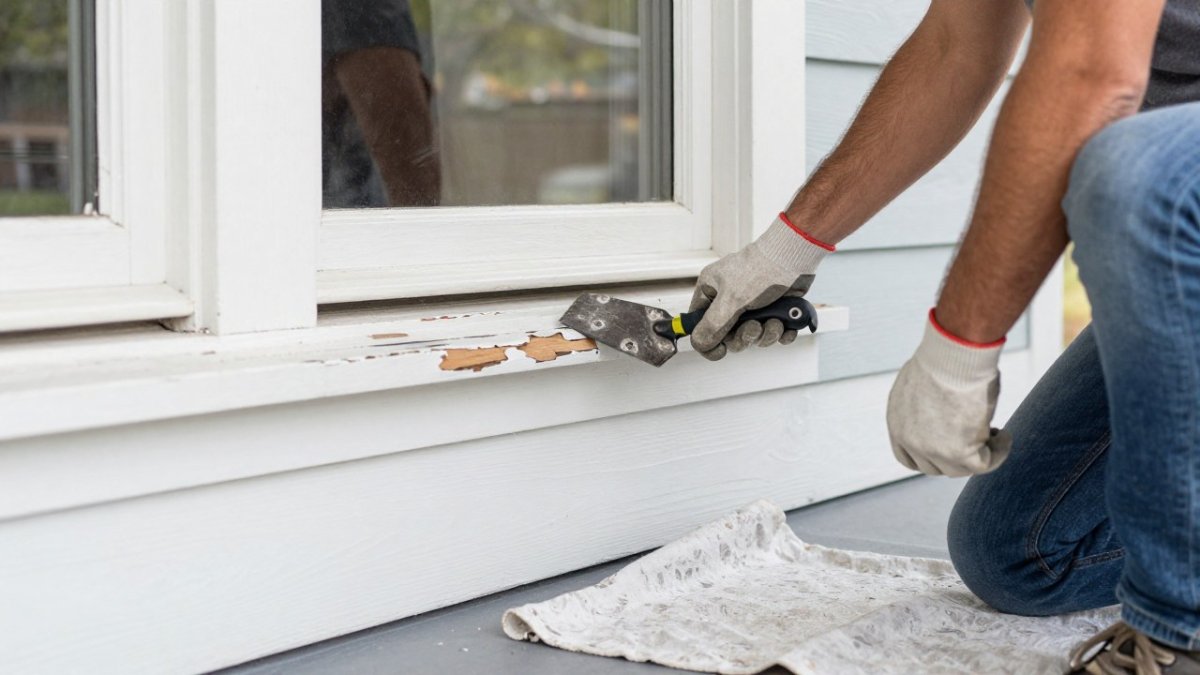
Paint in dry, mild weather, avoiding direct sun on hot surfaces. Most primers and topcoats need the surface dry and air temperature within the range on the can.
Apply primer first, then thin topcoats, as thin coats generally dry more evenly than one heavy coat.
Finishing Your Historic Trim in White or Period Colors
White trim is classic for many historic homes, but period colors like Indian red or Spanish brown were also common. Pick a color suiting the home's style and neighborhood, and check local approval rules if in a historic district.
Use a quality brush and cut in carefully. Paint top to bottom so drips can be caught, and let each coat dry fully before recoating.
Once cured, inspect the trim in good light and touch up small areas. Keep leftover paint for future repairs.
Frequently Asked Questions
What is the trick to painting trim?
The trick is preparation and patience. Scrape loose paint, sand edges smooth, fill holes and cracks with wood filler, and apply a primer suited to bare or previously varnished wood. Use a quality brush and work in thin coats, painting in the same direction as the wood grain. Let each coat dry fully before adding the next. Painting a small test area first helps you confirm adhesion and color before committing to the whole house.
Can I paint over old varnished wood trim?
Yes, but varnish is glossy and resists paint. Sand the surface thoroughly to dull the finish and create tooth for adhesion. Clean off dust, then apply a high-build or bonding primer made for glossy surfaces before the topcoat. Skipping the sanding or primer can lead to paint peeling off varnished trim.
Should trim be painted flat or satin?
Most historic trim is painted in satin or semi-gloss because these sheens resist moisture and are easier to wipe clean. Flat finishes hide surface flaws but scuff more easily, so they are usually reserved for ceilings and walls. Choose a sheen that matches how the trim is used and how much light it receives.
