Hiring Professional Painters for Historic Restoration Work
Last Updated: November 4, 2026
Quick Summary
Hiring professional painters for historic restoration means choosing a contractor who understands plaster, old wood, and pre-1978 lead paint rules, and who can prove it. Verify lead-safe practices, insurance, and licensing in writing, and compare bids on the same scope before signing.
- Ask for lead-safe practices and certification status in writing for homes built before 1978.
- Request a certificate of insurance showing coverage limits and the policy period.
- Confirm the contractor's license number with the issuing agency and check that it is current.
- Compare bids on the same scope, including surface prep, repairs, containment, and warranty.
- Avoid large upfront deposits and never pay the full amount before work is finished and inspected.
Table of Contents
- Why Historic Homes Need Specialized Painting Work
- What Qualifications a Historic Restoration Painter Should Have
- Questions to Ask a Painting Contractor Before You Sign
- Lead Paint Testing for Historic Homes and Required Safe Practices
- Historic House Painting Cost and What Drives the Price
- Exterior Surface Preparation for Historic Homes
- Comparing Bids, Contract Terms, and Payment Schedules
- Historic District Approvals and Preservation Rules
- Scheduling the Project Through Final Walkthrough
- Frequently Asked Questions
Why Historic Homes Need Specialized Painting Work
Historic homes were built with materials and methods that modern paint jobs often ignore, and that gap is where most failed projects begin. You can see whether a painter handles older homes with distinctive architectural features on Cityscape's historic-home painting page. Plaster, old-growth wood, and original trim expand, contract, and absorb moisture differently than the drywall and dimensional lumber used in newer construction. Hiring professional painters for historic restoration means finding people who understand those differences before the first brush touches the wall.
Cityscape Painting Company LLC provides interior and exterior painting for homes and businesses throughout Grass Valley, Nevada City, and Nevada County. Older homes often need careful surface preparation, including patching cracks and addressing damage before a new coating is applied.
The U.S. Environmental Protection Agency regulates lead-based paint in pre-1978 housing, and many historic properties fall squarely within that rule (the EPA). EPA Lead-Based Paint Renovation, Repair and Painting Program sets the work practices that apply to disturbing old paint, which is one more reason a painter's experience with older structures matters.
What Qualifications a Historic Restoration Painter Should Have
A qualified historic restoration painter combines three things: hands-on surface preparation skill, knowledge of period-appropriate materials, and documented compliance with lead-safe practices. The problem is that nearly every contractor claims all three, so the useful skill is knowing how to verify each one before you sign.
Treat the vetting process as a document review, not a conversation. Ask for the following items and check them yourself rather than accepting a verbal yes.
- Lead-safe practices. For homes built before 1978, ask any contractor for their lead-safe practices and certification status in writing, and confirm them with the EPA before work begins.
- Liability insurance and workers' compensation. Request a certificate of insurance naming the coverage limits and the policy period, and confirm the policy is active with the issuing agent.
- State or local licensing. Licensing rules for painting and home improvement contractors vary by state and sometimes by municipality. Confirm the license number with the issuing agency, and check whether the license is current and in the correct business name.
- Written scope and references. Ask for two or three references from projects on older homes comparable to yours, and call them. You can check a local Grass Valley and Nevada County painter's credentials and contact details on Cityscape's local painting services page. Ask specifically what went wrong, how change orders were handled, and whether the crew cleaned up as promised.
Portfolio work matters, but look at it critically. A painter who has repaired plaster ceilings, restored original windows, or matched a historic exterior color scheme has likely solved the problems your house presents. Ask what was original versus replaced, and ask to see before-and-after photos of the same elevation rather than a gallery of finished exteriors. You can read client reviews of Cityscape's detailed preparation and stained woodwork work before deciding whom to contact.
Watch out: a contractor who hesitates on certification numbers, insurance certificates, or licensing is a red flag regardless of how impressive the portfolio looks. Verify every document before work begins, and keep copies in your project file.
Questions to Ask a Painting Contractor Before You Sign
The questions you ask before signing reveal far more than the sales pitch. Good contractors answer them directly and in writing. Ask how they will prepare surfaces, which products they plan to use, and how they handle cracked plaster and failed previous paint.
Ask who will be on site each day and whether the crew members are employees or subcontractors. Ask how they protect floors, furnishings, and landscaping, and what their cleanup process looks like. Ask what happens if a problem is discovered mid-project, such as rot in a window sill or lead paint under a later layer.
Ask how long their finish is expected to last under your home's conditions, and what their workmanship warranty covers. A contractor who can explain the reasoning behind their prep and product choices is usually one who communicates clearly about the work.
Lead Paint Testing for Historic Homes and Required Safe Practices
Homes built before 1978 may contain lead-based paint, and disturbing it creates hazardous dust (the EPA). Lead paint testing for historic homes is the first step in planning safe work. Testing can be done with an EPA-recognized lead inspector or risk assessor, and results determine which containment and cleanup methods apply.
The EPA's Renovation, Repair and Painting Rule sets work practices for disturbing lead-based paint in pre-1978 housing. Review the EPA's current guidance for the specific requirements that apply.
Watch out: a painter who skips testing on a pre-1978 home is exposing your family and the crew to lead dust. Ask for their lead-safe practices in writing before work begins.
Historic House Painting Cost and What Drives the Price
Pricing depends on quantity, dates, and the scope of work. For current pricing on your project, request a written estimate from Cityscape Painting Company LLC through its website.
The harder problem is comparing bids that look different on paper. A structured comparison keeps you from rewarding the lowest number for the smallest scope. Build a simple grid with one row per scope item and one column per bidder, and fill in what each bid actually includes:
- Surface preparation method (hand scraping, chemical stripping, sanding) and how much square footage it covers
- Repair allowances for plaster, wood rot, and failed previous coatings, stated in linear feet or square feet rather than a lump sum
- Containment and cleanup procedures for lead-safe work
- Number of coats, product brands, and sheens for body, trim, and doors
- Whether pressure washing, caulking, and priming are included or billed separately
- Warranty length and what it covers
A lower bid that omits containment, repair allowances, or a finish coat is not a better value. Ask each bidder to price the same written scope so the numbers are comparable.
Payment terms deserve the same scrutiny. A common structure is a modest deposit, progress payments tied to defined milestones, and final payment after a walkthrough. Avoid large upfront deposits, and never pay the full amount before the work is finished and inspected. Change orders should be written and signed before any extra work begins, with the added cost and schedule impact stated in the document.
Watch out: a bid that is dramatically lower than the others usually reflects a smaller scope, not a better deal. Ask what is excluded, and get the answer in writing before you compare prices.
The article's cost section lays out the scope items that separate comparable bids, which can be summarized as a quick checklist.
| Bid item | What to confirm | Why it matters |
|---|---|---|
| Surface preparation | Method and square footage covered | Determines how long the finish lasts |
| Repair allowances | Stated in linear or square feet | Avoids hidden costs from plaster or wood damage |
| Containment and cleanup | Lead-safe procedures included | Protects your family and the crew |
| Coats and products | Number of coats, brands, and sheens | Ensures bids cover the same scope |
| Pressure washing, caulking, priming | Included or billed separately | Explains large gaps between bid totals |
| Warranty | Length and what it covers | Defines what you are protected against |
Exterior Surface Preparation for Historic Homes
Exterior preparation determines how long a historic exterior paint job lasts. Begin by identifying failed paint, moisture damage, and loose or rotted wood. Scraping and sanding must be done with lead-safe methods on pre-1978 homes, and every crack or open joint needs to be sealed before priming.
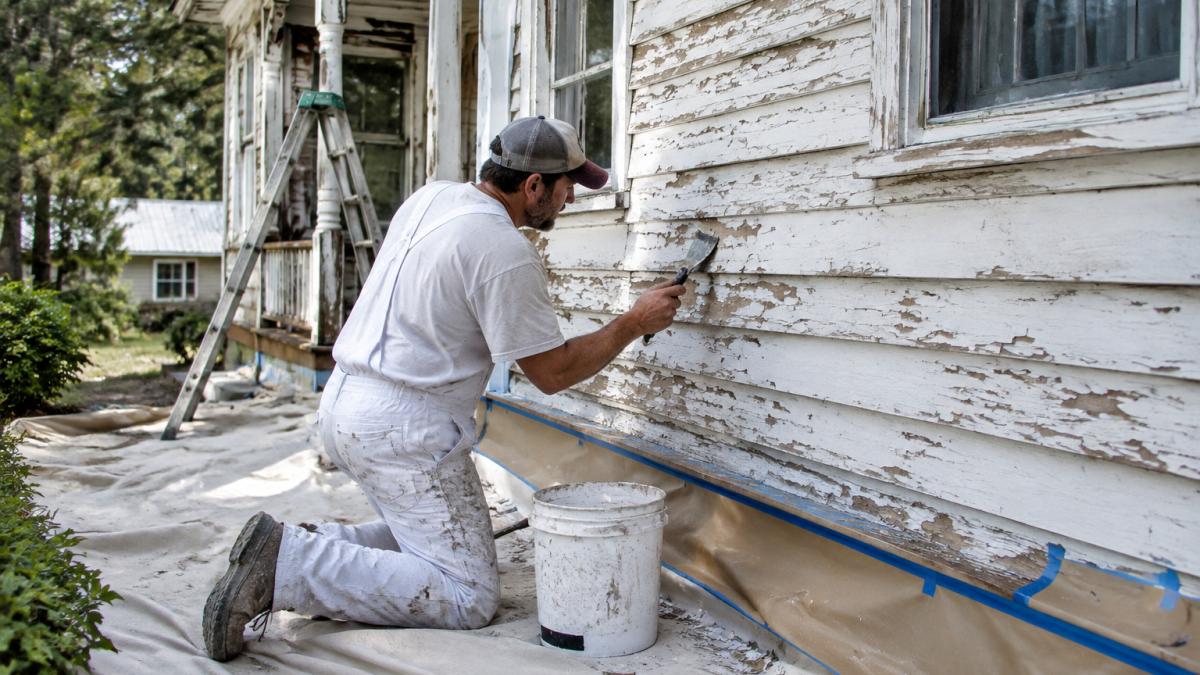
Cityscape Painting Company LLC provides a coordinated finish for siding, stucco, and trim, with careful surface preparation that includes caulking, nail-hole filling, and drywall texture patches. You can review their siding, trim, and exterior finish service to see how they approach exterior projects.
Moisture is the most common cause of premature failure. Check for sources such as gutters that overflow, grading that slopes toward the foundation, and vents that release humidity into siding. Correcting these before painting protects the finish you pay for.
Comparing Bids, Contract Terms, and Payment Schedules
A written bid should itemize labor, materials, prep and repair work, containment, cleanup, and warranty terms. Compare bids on the same scope, not just the bottom line. Confirm the number of coats, the product brands and sheens, and whether trim, doors, and exterior surfaces are included.
Review the contract for start and completion dates, change order procedures, and how disputes are handled. Change orders should be written and signed before any extra work begins. Read warranty language carefully to understand what is covered, for how long, and what voids it.
Payment schedules should be tied to completed milestones rather than large upfront deposits. A common structure is a modest deposit, progress payments at defined stages, and final payment after a walkthrough. Avoid paying the full amount before work is finished.
Historic District Approvals and Preservation Rules
Many historic neighborhoods have design review boards or preservation ordinances that regulate exterior changes, including color selection and the replacement or repair of architectural features. Check with your local planning or historic preservation office before you choose colors or begin exterior work, since approvals can take time.
Ask your painter whether they have experience working within historic district guidelines. Some preservation rules limit paint colors to historically documented palettes, and some require specific repair methods for original siding or trim. Submitting a complete application with photos and a clear scope usually speeds approval.
Scheduling the Project Through Final Walkthrough
Plan the timeline with your contractor before work begins. Exterior projects are weather-dependent, and most paints require minimum temperatures and dry conditions to cure properly. Interior work may require moving furniture, protecting rooms, and temporarily relocating household activity.
Expect some disruption, especially during lead-safe containment and prep. Ask how daily progress will be communicated and who you should contact with questions. Schedule a walkthrough before final payment to check the work against the contract, noting any touch-ups needed in writing.
After completion, follow the maintenance schedule your contractor recommends, typically including periodic inspection of caulking, gutters, and high-exposure surfaces. Keeping up with these checks is what turns a good paint job into one that lasts.
Frequently Asked Questions
How do I choose a painter for a historic home?
Start by asking for references from prior historic or older-home jobs, not just recent residential repaints. Check whether the company has worked with original plaster, wood trim, and decorative details, and whether its crew understands surface preparation for paint that may contain lead. Ask who will be on site daily and whether the owner supervises the work. Request photos of previous projects and confirm the company carries general liability insurance and workers' compensation. A written estimate that lists prep, repairs, materials, and product lines is a good sign of a careful contractor.
What questions should I ask before hiring a painter for historic restoration?
Ask how they test for lead paint and what containment and cleanup methods they use. Ask which paint systems they recommend for your substrate and why, and how they handle moisture in older walls. Find out who performs repairs to damaged woodwork or plaster, and whether those repairs are included in the bid. Ask about the warranty on their prep and finish, how change orders are priced, and what the payment schedule looks like. Finally, ask whether they have experience with historic district review if your property is in one.
How much does it cost to hire a painter for a historic home?
Pricing depends on the size of the home, the condition of the existing paint, the extent of repairs, the number of decorative details, and access conditions. Historic exterior work often costs more than comparable modern work because of extended surface preparation and repair. Pricing depends on quantity, dates, and the scope of work, so current pricing is best confirmed through a written estimate from Cityscape Painting Company LLC. Request a quote from the company's website to see how these factors apply to your property.
Do I need approval to repaint a historic home?
It depends on where the property is located and whether it is designated. Many local jurisdictions regulate exterior changes, including color and certain materials, for properties in a historic district or on a historic register. Check with your local planning or historic preservation office before the work begins, since approvals can affect timelines. Interior work is usually not regulated, but some designated interiors with significant features may fall under additional review.
How can I tell whether old paint contains lead?
Homes built before 1978 may have lead-based paint, and lead testing is the only reliable way to confirm it. Testing options include paint chip sampling sent to a laboratory and surface testing with an X-ray fluorescence analyzer. Work performed on pre-1978 homes should follow lead-safe practices, and a contractor should be familiar with the EPA's Renovation, Repair, and Painting Rule. Ask your painter how they will handle testing results before disturbing any painted surface.
Hiring the right painter for a historic home protects your investment and your family's health. If you are planning a project, Cityscape Painting Company LLC offers interior and exterior painting, cabinet refinishing, and deck staining across Grass Valley, Nevada City, and Nevada County, with careful surface preparation on every job. Request an estimate today and let us review your home's needs with you.
