Hiring Painters for Rental Property Maintenance: The Owner's Guide

Last Updated: November 1, 2026
Quick Summary
Hiring painters for rental property maintenance works best when you start with a clear picture of what each unit needs, then compare written, room-by-room estimates that include drywall repair, prep, and coat count. Verify insurance and licensing, and get the schedule and warranty terms in the contract before work begins.
- Cheap quotes often leave out patching, primer on stains, and a second coat on high-traffic walls.
- Ask for room-by-room estimates and price drywall repair separately so extras stay predictable.
- Get proof of liability insurance and workers' compensation before signing with any contractor.
- Request unit pricing on extras like additional rooms or extra drywall repair before work starts.
- Put the start date, completion window, and schedule-slip remedy in the written contract.
Table of Contents
- Why Rental Property Painting Needs a Different Hiring Approach
- How Often to Repaint a Rental Property and Why It Matters
- Rental Property Painting Cost: What Drives the Price
- How to Screen and Verify a Painting Contractor
- Questions to Ask a Painting Contractor Before You Sign
- Painting Estimate Checklist for Landlords
- Scope of Work, Bids, and Contract Terms
- Choosing Durable, Tenant-Friendly Paint and Finishes
- Scheduling Turnover Painting to Minimize Vacancy Time
- Book Your Next Rental Painting Estimate with Cityscape
- Frequently Asked Questions
Why Rental Property Painting Needs a Different Hiring Approach
Hiring painters for rental property maintenance is not the same job as hiring someone to repaint your own home. A rental has to be turned around between tenants, it takes a lot of wear, and every week it sits empty costs you rent. Hiring decisions that go well usually start with a clear picture of what the property needs.
Many landlords approach this the same way they would a personal project: they call a few painters, pick the lowest quote, and hope for the best. That approach often backfires. A quote that looks cheap may leave out patching, primer on stains, or a second coat on high-traffic walls, and the work may not hold up through the next tenant.
A rental also has two audiences. The first is the next tenant, who expects clean, consistent walls. The second is the owner, who needs the finish to last through several turnovers without peeling, flashing, or showing every scuff. A good contractor for this work thinks about both.
Hiring painters for rental property maintenance well means asking different questions. How fast can the crew work? How do they handle drywall repair and nail holes? Can they keep a schedule that fits your vacancy window? Those answers matter more than the color swatch.
How Often to Repaint a Rental Property and Why It Matters
Repainting frequency depends on the property, the tenants, and the paint already on the walls. Many owners repaint interiors between tenants, while exterior paint is usually scheduled on a longer cycle tied to weather and surface condition. The useful question is not "how many years?" but "what condition are the surfaces in right now?"
Interior walls in high-traffic areas such as hallways, kitchens, and entryways tend to show wear first. Doors, door frames, and baseboards pick up scuffs quickly. Exterior trim and decks show sun damage and moisture problems, and those problems spread if they go unaddressed.
Waiting too long creates a bigger job. Peeling paint, water intrusion, and failing caulk turn a simple refresh into surface repair followed by painting. Repainting on a regular schedule keeps the work smaller and the finish more consistent across units.
Document each unit's condition at move-out. Photos and a short checklist give you a clear record for deciding what needs attention and for handling deposit questions.
Rental Property Painting Cost: What Drives the Price
A single number tells a landlord almost nothing about a turnover. The useful way to budget is to break the job into the parts that actually move the price: labor, materials, prep and repair, and the schedule premium you pay for speed.
A common pattern in rental work is to price by the unit rather than by the square foot. A one-bedroom apartment with average wear is a smaller scope than a three-bedroom house with patched drywall, tall ceilings, and stained ceilings in the bathroom. Ask each contractor to quote room by room so you can see which rooms are driving the total.
Labor. Labor is usually the largest line item, and it scales with surface area, ceiling height, and the amount of cutting in around doors, windows, and cabinetry. A unit with vaulted ceilings or extensive trim takes longer per wall than a standard eight-foot room. Two coats on every wall roughly doubles the wall-painting labor compared with a single coat, which is why "one coat or two" is one of the first questions to settle.
Materials. Paint, primer, caulk, patch compound, tape, and plastic are a smaller share of the total than labor. Ask the contractor to list the exact product and sheen in the bid so you can compare bids on the same materials.
Prep and repair. This is the line that separates a cheap bid from a realistic one. Filling nail holes, patching drywall, caulking trim, sanding edges, and priming stains all take labor before the first coat. A unit that has been occupied for several years typically needs more patching than a recently painted one. Get drywall repair priced separately, ideally per patch or per hour, so you know what extras will cost if the crew finds more damage during prep.
Access and schedule. A vacant unit that is ready for the crew on day one is the cheapest schedule. A unit that must be painted in phases around a tenant, or that needs weekend or evening work, usually carries a premium. Exterior work adds stories, ladder or lift access, and weather risk, all of which affect price.
A practical budgeting approach. Rather than asking "what does it cost to paint a rental," ask for three numbers: a touch-up and refresh price for a unit in good condition, a full interior repaint price for an average-wear unit, and a per-patch or per-room price for extras. That gives you a range you can plan around and a basis for comparing bids when the scope changes.
For current pricing on your property, request a written estimate from Cityscape Painting Company LLC. Quotes are based on your specific scope, not a standard rate.
How to Screen and Verify a Painting Contractor
Screening a contractor protects your property and your tenants. Start by confirming the business is legally registered and carries liability insurance and workers' compensation coverage. Ask for proof of both. Verify the company name matches the license or registration on file with your state.
Check references from other property owners or managers, not just homeowners. Rental work involves tighter timelines and different expectations, and a contractor who has handled multi-unit turnovers will have a track record you can ask about directly.
Read reviews with care. Look for patterns across several reviews, such as consistent praise for responsiveness or repeated complaints about missed deadlines. A single glowing review or a single complaint tells you less than a clear pattern does.
Ask who will actually be on site. Find out whether the crew is employees or subcontractors, and who supervises the work.
Cityscape Painting Company LLC is owner-operated. Customer feedback we have received includes comments on attention to detail and responsiveness.
Questions to Ask a Painting Contractor Before You Sign
Before you sign, ask questions that reveal how the work will actually be done. Good answers are specific. Vague answers are a warning sign.
- What surface preparation is included? Ask about patching, caulking, primer, and cleaning.
- How many coats are included, and what paint line will be used?
- How do you protect floors, fixtures, and adjacent surfaces during the job?
- What is your warranty on the finish, and what does it cover?
- How do you schedule around a unit turnover, and what happens if the schedule slips?
- Who is my point of contact during the project?
Also ask about older properties if that applies to your building. Plaster walls, cracks, and original trim need a different approach than new drywall. If your building is historic, confirm the contractor has experience with that surface before work begins.
Watch out: a verbal promise about finish life or timing that is not written into the contract is hard to enforce later. Get the terms in writing.
Painting Estimate Checklist for Landlords
Use this checklist to compare estimates on equal terms:
- Scope listed room by room, including ceilings, trim, and doors
- Drywall repair and nail-hole filling itemized
- Primer specified for stained or repaired areas
- Paint brand, sheen, and number of coats stated
- Surface prep and masking described
- Cleanup and debris removal included
- Start date, duration, and completion window stated
- Payment schedule and deposit terms written out
- Insurance and licensing details provided
- Warranty terms and coverage period noted
A checklist does not make the decision for you, but it shows which estimates are actually comparable. If one bid is missing half these items, it is not the same job as the others.
Scope of Work, Bids, and Contract Terms
A written scope of work is the foundation of a clean project. It should state the areas to be painted, the surfaces to be prepared, the products to be used, and the number of coats. Attach photos of the current condition if possible so both parties agree on the starting point.
Bids should be itemized so you can see where the money goes. A lump-sum number with no breakdown makes it hard to adjust scope later. Ask for unit pricing on extras, such as additional rooms or extra drywall repair found during prep.
Contract terms should cover payment milestones, change-order procedures, schedule commitments, and what happens if the job runs over. Make sure the contract names the company that will do the work, not just a salesperson. For reference on what interior turnover painting includes, see interior walls, ceilings, trim, and doors with careful masking.
Keep copies of everything, including signed estimates, change orders, and final invoices. These records help with warranty claims and with your own bookkeeping.
Choosing Durable, Tenant-Friendly Paint and Finishes
For rentals, durability usually matters more than a premium look. Washable finishes in kitchens, bathrooms, and hallways stand up to cleaning, and a consistent sheen across units makes future touch-ups easier to match.
Eggshell and satin finishes are common in rental interiors because they clean well and hide minor imperfections better than flat paint. Flat finishes can look refined on ceilings but show scuffs quickly on walls. Ask your painter which sheen they recommend for each surface and why.
For cabinets, trim, and doors, a durable enamel or a finish designed for high-contact surfaces holds up better than standard wall paint. Decks and exterior wood need finishes designed for sun and moisture exposure. Cityscape Painting Company LLC provides cabinet refinishing and deck staining.
Standardize your paint colors and products across units. It simplifies future repairs and reduces the chance of mismatched walls at each turnover.
Scheduling Turnover Painting to Minimize Vacancy Time
Vacancy is the real cost of a turnover, and the painting schedule is where most of that cost is won or lost. The goal is to compress the empty-unit window into a predictable sequence: access, prep and repair, painting, drying and ventilation, inspection, and move-in cleaning. Build the schedule backward from the move-in date rather than forward from the move-out date.
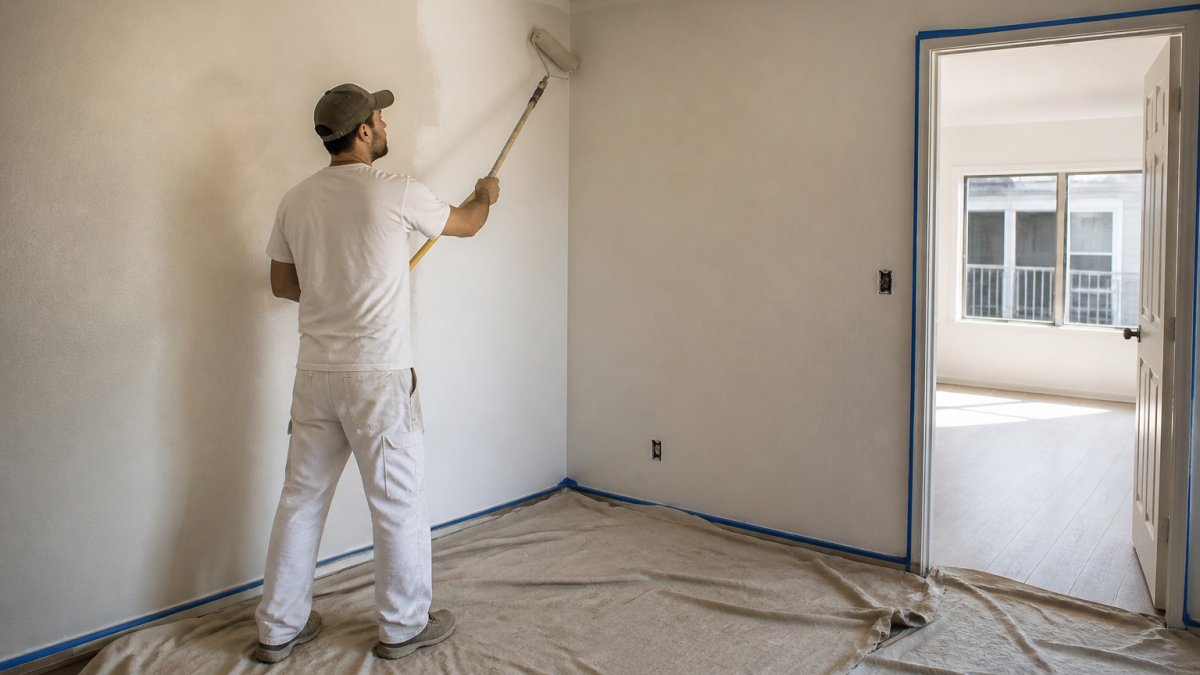
Before move-out. Confirm the painting scope while the unit is still occupied, using photos and a walkthrough. Book the crew for the day after the tenant vacates, and confirm who holds the key and how access will work. If the lease allows, ask the outgoing tenant to clear walls and remove furniture a day early; an empty unit lets the crew start prep immediately instead of waiting on furniture.
Day 1: access and protection. The crew masks floors, fixtures, and adjacent surfaces, then begins patching and caulking. Nail holes, anchor holes, and small drywall damage are filled and sanded. This is also when stains are primed so they do not bleed through the finish coat.
Day 2: primer and first coat. Primer goes on repaired and stained areas, followed by the first finish coat on ceilings and walls. Cutting in around trim and cabinetry takes time, so a realistic schedule gives the crew a full day for this stage in an average unit.
Day 3: second coat and trim. The second coat goes on walls, and doors, trim, and baseboards are painted. If cabinets are being refinished, that work usually runs on its own multi-day track because of dry time between coats.
Drying and ventilation. Latex paint typically needs several hours between coats and longer before heavy cleaning or furniture placement. Keep windows open and air moving, and plan move-in cleaning after the paint has cured enough not to be damaged by wiping. In humid or cool weather, add buffer time rather than assuming the same dry time as a warm, dry day.
Inspection before move-in. Walk the unit with the contractor before the crew leaves. Check coverage in corners, drips on trim, and whether patched areas are smooth. Catching issues before the final invoice is easier than scheduling a return visit after the tenant moves in.
Exterior work. Exterior painting is weather-dependent. Schedule it with a flexible window and confirm the contractor's rain and temperature limits in the contract. Exterior projects on occupied rentals can often be phased so tenants keep access to doors and walkways.
Batching units. Painting several units in sequence lets the crew stay efficient and can lower the per-unit price. Ask whether a standing schedule or a multi-unit rate is available, and whether the contractor can hold a slot for your next turnover.
Have a plan for weather on exterior work.
Book Your Next Rental Painting Estimate with Cityscape
If you own or manage rental property in Grass Valley, Nevada City, or the surrounding Nevada County area, Cityscape Painting Company LLC can give you a written estimate for your turnover, refresh, or exterior project. Owners in the Truckee area can find residential and commercial painting inquiries in Truckee and North Lake Tahoe. We focus on careful surface preparation and high-quality finishes, and we work with individual owners and property managers.
Request an estimate from Cityscape Painting Company LLC to get a scope and price specific to your property.
Frequently Asked Questions
How do I choose a painter for a rental property?
Start by checking that the painter carries liability insurance and workers' compensation, and ask for references from other landlords or property managers. Request a written estimate that lists surface preparation, patching, number of coats, and paint type for each room. Compare at least three bids on the same scope rather than on price alone. A painter who asks about your tenant turnover timeline and listens to your needs is usually a better long-term partner than the lowest bidder. Confirm the warranty on workmanship in writing before you sign anything.
What should a painting estimate for a rental property include?
A useful estimate lists every room and exterior surface in scope, along with the prep work each requires, such as drywall patching, nail-hole filling, and caulking. It should specify the number of coats, the paint brand or product line, and whether ceilings and trim are included. Labor, materials, masking, and cleanup should appear as separate line items. The estimate should also state a start date, expected duration, and payment schedule. Ask the contractor to note any conditions that could change the price, such as hidden water damage or plaster repairs.
How much does it cost to paint a rental property?
Rental property painting cost depends on square footage, ceiling height, the condition of the walls, the number of rooms, and whether the job is a full repaint or a turnover touch-up. Pricing also varies with paint quality, the amount of prep work, and how quickly the job must be finished. Cityscape Painting Company LLC does not publish standard prices, so the most accurate figure comes from a site-specific estimate. Request quotes that break out labor and materials so you can compare bids on equal terms.
How often should rental properties be repainted?
Many landlords repaint interiors between tenants or every few years, while exterior surfaces such as siding, trim, and decks typically need attention on a longer cycle that depends on weather exposure. High-traffic areas, kitchens, bathrooms, and stairwells may need touch-ups more often than bedrooms. Repainting between tenants also helps you spot damage early. Plan your schedule around lease cycles so that painting happens during natural vacancies and does not cut into rental income.
How long does it take to paint a rental unit between tenants?
A single apartment or small rental often takes a few days for a standard turnover, including patching, priming where needed, two coats, and cleanup. Larger homes or units with heavy damage can take longer, especially if drywall or plaster repairs must cure before paint goes on. Ask your painter for a timeline in the estimate and confirm whether it assumes a specific number of working days. Booking the job before the outgoing tenant leaves can shorten the vacancy period.
